Why Doubling a Recipe Never Takes Twice as Long - and the Two Places It Does
Quick Answer: Most of the time in a recipe is fixed overhead - getting things out, chopping, heating a pan, washing up - and none of it doubles. Doubling typically costs about 20 to 40 percent more time, not 100. But two steps genuinely do scale: browning, and anything that needs evaporation. Both are limited by pan surface area, not by pan volume, so twice the food in the same pan takes far more than twice as long and comes out worse. The fix is a second pan or two batches, and it is the single thing that decides whether doubling saves you an evening or costs you one.
Batch cooking advice is confident about the benefit and vague about the mechanism, which is why people try it, have one recipe take ninety minutes instead of the promised fifty, and conclude it does not work for them.
It does work. But the saving is not evenly distributed, and if you double the wrong recipe on the wrong equipment you get the worst of both - more time and worse food.
Knowing which two steps break is the entire difference.
Where does the time in a recipe actually go?
Mostly in overhead, which is why doubling is efficient at all.
A rough breakdown of a typical 40-minute weeknight dinner:
- Setup - finding ingredients, getting out pans and boards, reading the recipe: 5 to 8 minutes. Does not change when you double.
- Prep - chopping, measuring, opening things: 10 to 15 minutes. Scales partially - twice the onions takes longer to chop, but not twice as long, because your knife is already out and your hands are already doing the motion.
- Heating - waiting for a pan, an oven, or water to boil: 5 to 10 minutes. Does not change, and a larger volume of water takes only modestly longer.
- Active cooking - stirring, turning, watching: 10 to 20 minutes. This is where the exceptions live.
- Cleanup - washing the same pans and boards: 8 to 12 minutes. Barely changes. One pot is one pot whether it held two portions or six.
Add it up and doubling a typical recipe usually costs 20 to 40 percent more time for 100 percent more food. Over a week that is genuinely transformative, and it is the honest case for batch cooking.
But it depends entirely on the active cooking step behaving, and there are two situations where it does not.
The first exception: browning
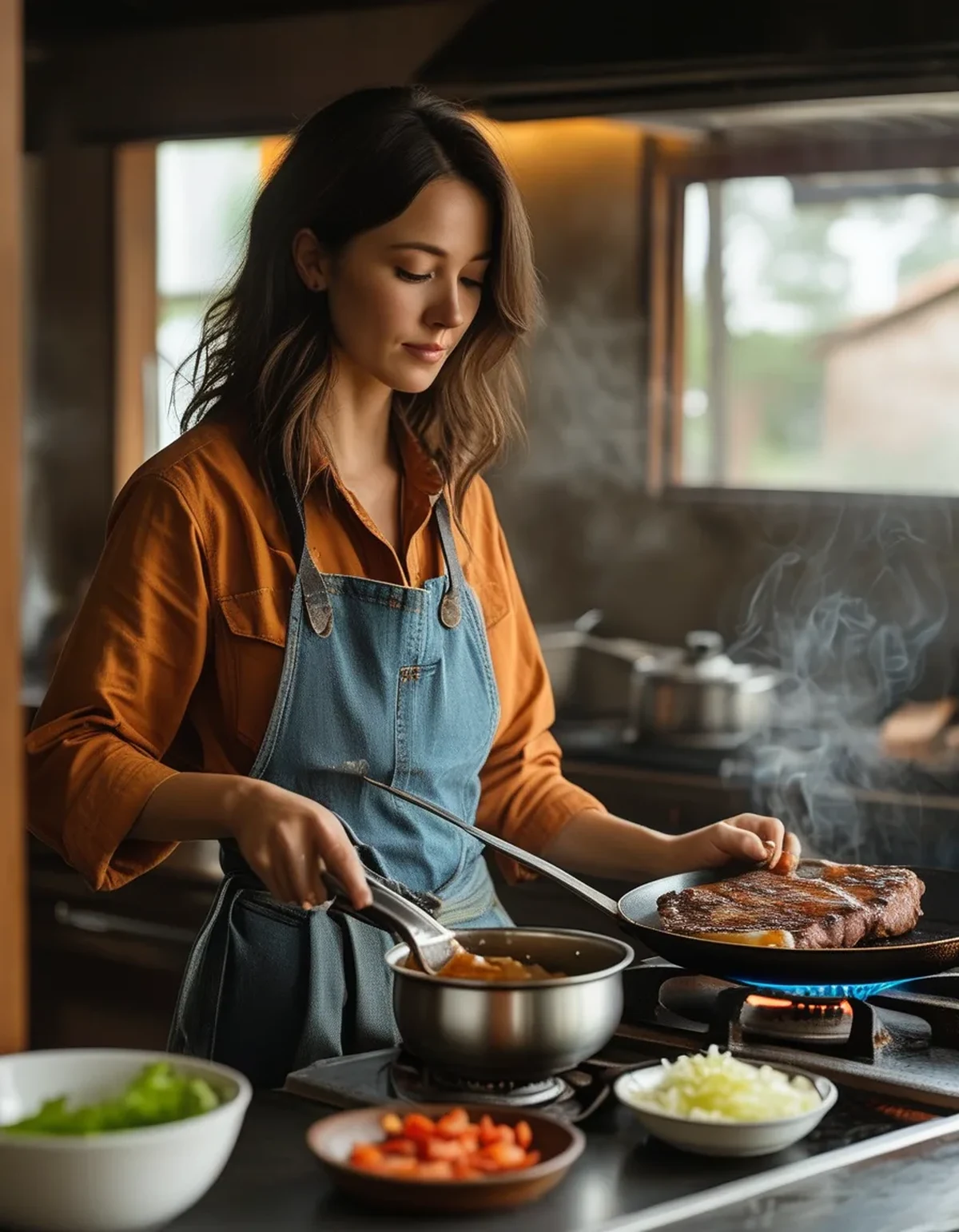
Browning is limited by pan surface area, and adding food does not add surface area.
The mechanism is worth understanding because it explains a lot of disappointing meals. Browning - the Maillard reaction - requires the food’s surface to be above roughly 140°C and dry. Food releases water as it heats. If the pan cannot evaporate that water as fast as it is released, the temperature drops to around 100°C and the food steams instead of browning.
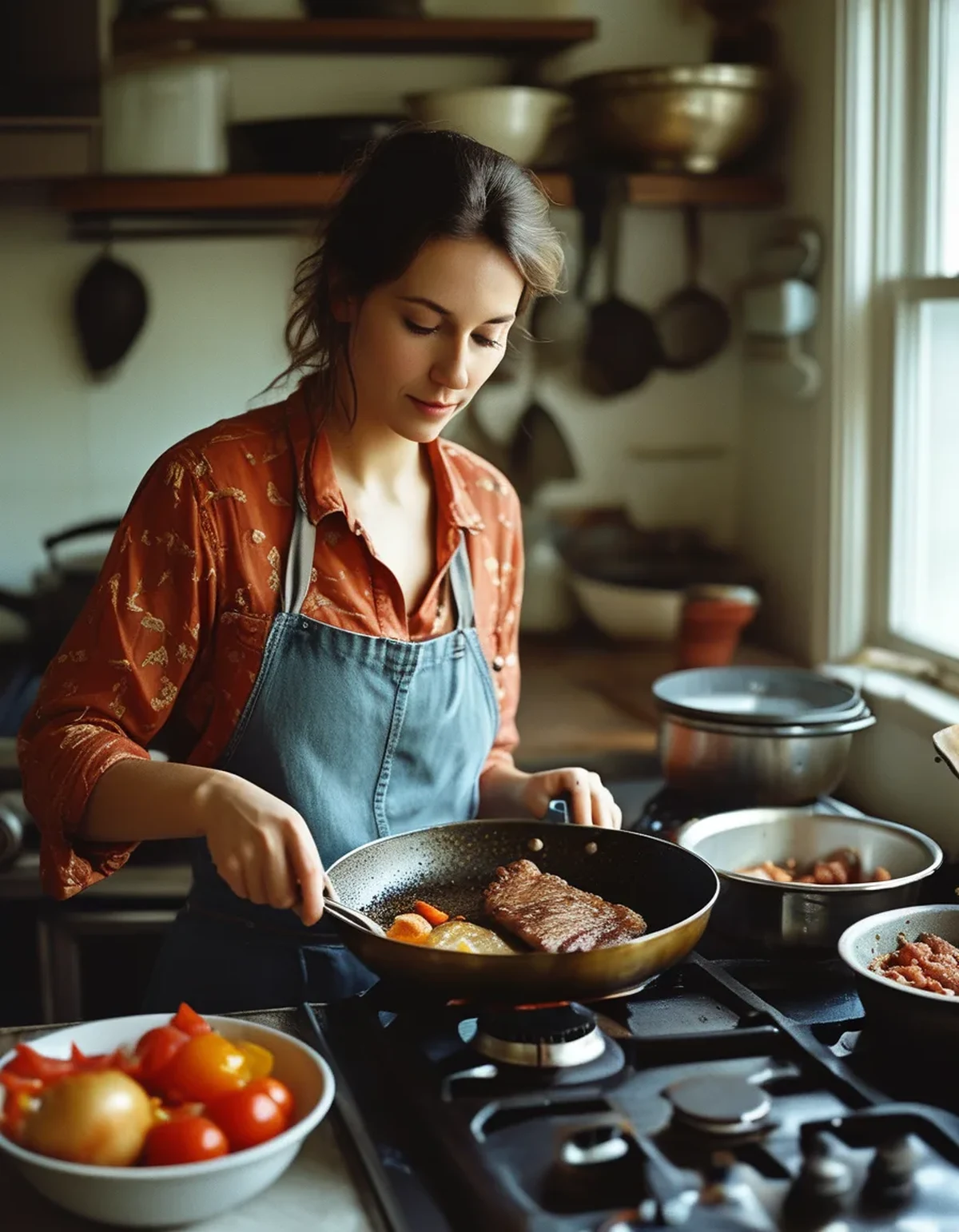
Put twice the mince in the same pan and you get twice the water into a pan with the same evaporation capacity. The pan floods, the temperature crashes, and you now stand there for fifteen extra minutes waiting for liquid to cook off before browning can start at all.
The result is worse than slow. Steamed mince is grey and flat-tasting. The browning you skipped is where a large part of the flavour of the finished dish was going to come from, so you have spent longer and produced something noticeably worse.
The fixes, in order of preference:
- Use a second pan. Two pans doing one layer each is dramatically faster than one pan doing two layers, and it is one extra thing to wash.
- Brown in two batches in the same pan. Slower than two pans, still far faster than crowding.
- Use a bigger pan or a roasting tray in the oven. An oven tray has excellent surface area and requires no attention while it works.
- Get the pan properly hot first, and do not stir for the first ninety seconds. Both matter more when you are close to the pan’s capacity.
The rule: food should be in a single layer with visible gaps. If you cannot see pan between the pieces, you are steaming.
The second exception: reduction and evaporation
Anything that needs liquid to cook off scales badly for the same reason.
Evaporation happens at the surface of the liquid, so the rate is set by the surface area of the pan - not by how much liquid is in it. Double the sauce in the same pot and you have doubled the water with no increase in the rate it can leave. Reduction time can more than double.
The recipes this affects most:
- Tomato sauces that need to thicken
- Curries and stews finished by reduction
- Risotto, which is entirely an evaporation process
- Pan sauces built from deglazing
- Anything with wine or stock cooked down
What actually helps:
Use a wider pot, not a taller one. A wide sauté pan reduces a sauce far faster than a tall saucepan holding the same volume. This is the single most useful piece of equipment knowledge for batch cooking, and it costs nothing to apply.
Leave the lid off during reduction, obviously, and resist the temptation to cover it to speed things up - a lid actively prevents the process.
Reduce the liquid before doubling it. Scale solids fully and liquids to about 1.5 times rather than 2. Doubled recipes are frequently too wet even after full cooking, because the pot loses proportionally less to evaporation than a smaller one would.
Or accept a longer cook and do something else. A doubled stew that needs an extra twenty minutes of unattended simmering is not really costing you twenty minutes if you are washing up during it. Unattended time is not the same as active time, and this distinction is what makes doubling worthwhile even in the exception cases.
5 Mistakes Everyone Makes When Doubling
1. Doubling the salt and seasoning exactly. Salt scales roughly linearly, but aromatics, spices and chilli often do not - a doubled quantity of strong spice can overpower. Start at about 1.5 times for spices and adjust at the end. Salt you can add; you cannot remove it.
2. Doubling the liquid exactly. A larger pot loses proportionally less liquid to evaporation, so a doubled recipe with doubled liquid frequently ends up too wet. Scale liquids to about 1.5 times and add more if needed.
3. Crowding the pan and calling it browning. The most costly mistake on the list, because it makes the food worse as well as slower. Two pans or two batches, always.
4. Using the same oven timing. A doubled tray of vegetables, or two trays instead of one, changes the oven’s thermal load and airflow. Expect 10 to 20 percent longer, rotate trays halfway, and do not crowd the tray for the same reason you do not crowd a pan.
5. Doubling something that does not keep. The saving only exists if you eat the second half. Fried food, anything crisp, and delicate fish all reheat badly. Double the braises, sauces, stews, grains and roasted vegetables - things that are as good or better on day two - and cook the crisp things fresh.
Which recipes are actually worth doubling?
The saving is largest where the overhead is high and the two exceptions do not apply.
Excellent candidates:
- Braises and stews. Long unattended cooking, minimal browning relative to total time, and better on day two.
- Tomato and pasta sauces. Freeze well, reheat perfectly. Just use a wider pan for the reduction.
- Soups. Almost pure overhead - prep, one pot, one clean-up.
- Grains and pulses. Rice, lentils, beans. Doubling costs essentially no extra time at all, and they transform three later meals.
- Roasted vegetables, provided you use two trays rather than one crowded one.
- Spiced mince bases. Brown in two batches, then it becomes tacos, pasta sauce and a rice bowl across the week.
Poor candidates:
- Stir fries. Almost entirely surface-area limited, and they do not reheat well. Doubling one produces a wet grey pile.
- Anything fried or breaded. Crispness does not survive storage, and frying in batches is genuinely slow.
- Delicate fish. Poor reheating, and it cooks so fast that the overhead saving is negligible.
- Risotto. Pure evaporation, plus it needs continuous attention and does not reheat well.
- Fresh salads. Dressed salad does not keep. Components can be prepped ahead; the assembled dish cannot.
And a practical note for right now: this is the fortnight when weeknight schedules get complicated again. The batch to cook is the one that becomes three different meals, not three identical portions of the same one - a spiced mince base or a tray of roast vegetables beats three containers of the same finished dinner, because variety is what determines whether the third portion actually gets eaten.
FAQ: Batch Cooking Questions, Answered
How much extra time does doubling actually take?
For most recipes, 20 to 40 percent more time for twice the food. The exceptions are recipes with significant browning or reduction, where it can approach or exceed double if you use the same pan. The single best predictor is whether the recipe has a step where food sits in a single layer - if it does, plan for a second pan.
Can I triple instead of double?
Sometimes, and the constraints get harder rather than scaling smoothly. Equipment usually becomes the limit before technique does - pot capacity, oven space, fridge and freezer room. Tripling works well for soups, stews and grains where the pot is the only constraint. It works badly for anything needing browning, since you now need three batches or three pans.
Is it better to double a recipe or cook two different things?
Double, if the saving is what you are after - two different recipes means two sets of overhead, which is the expensive part. But three days of identical dinners is the most common reason batch cooking gets abandoned, so the best answer is usually to double a base - mince, roast vegetables, a grain, a protein - and finish it differently each time. Same saving, no repetition.
General cooking information. Follow standard food safety guidance for cooling and storing batch-cooked food - cool quickly, refrigerate within two hours, and use within three to four days.
TL;DR:
- Most recipe time is fixed overhead - setup, heating, cleanup - and none of it doubles. Expect 20 to 40 percent more time for twice the food.
- Two steps genuinely scale: browning and reduction. Both are limited by pan surface area, not volume.
- Two pans beat one crowded pan every time, for speed and for flavour.
- Scale solids fully, liquids to about 1.5x, and spices to about 1.5x. Salt you can add later.
- Double the braises, sauces, grains and roasted vegetables. Never double a stir fry.
Batch cooking is not about willpower or organisation. It is about knowing which two steps do not scale, and putting out a second pan before you start.
Keep Reading
This article is for general informational purposes only and is not medical advice. Always consult a qualified health professional for guidance specific to you.