The Two Pan Rule That Makes Easy Dinners Feel Like Actual Cooking
Quick Answer: One pan meals bland out because everything cooks in the same liquid at the same temperature, so every component ends up with the same texture and the same flavour. Adding one small second pan for a single high-heat or fresh element - browned protein, crisped onions, toasted nuts, or a quick dressing - restores contrast in texture and temperature. It costs about four minutes and one extra item to wash, and it is the difference between food that is convenient and food you actually look forward to.
The one pan dinner did exactly what it promised. Everything cooked, nothing burned, one thing to wash.
It also tasted like everything had been cooked together, which it had.

Why does one pan food taste flat?
Everything reaches the same texture. In a single pan, all components spend the same time at similar temperatures in shared moisture, so the vegetables, the starch, and the protein converge on one texture. Contrast is what makes food interesting, and a single pan removes it by design.
Browning does not happen in a crowded wet pan. The reactions that create deep savoury flavour need high heat and a dry surface. Add enough ingredients and liquid to a pan and the temperature drops below the point where browning occurs, so you get steamed food rather than roasted or seared food.
Everything shares one flavour profile. Whatever you season the pan with flavours all of it equally. There is no bright element, no contrasting element, nothing that tastes different from the last bite.
Aromatics get overcooked or undercooked. Garlic wants a minute; onions want ten; a root vegetable wants thirty. In one pan, at least one of them is wrong.
And temperature is uniform on the plate. Part of what makes food feel considered is contrast between hot and cool - a warm bowl with a cool dressing or fresh herb on top. A single pan produces a plate that is entirely one temperature.
None of which makes one pan cooking bad. It makes it a base rather than a finished dish, which is precisely what the second pan addresses.
What should the second pan actually do?
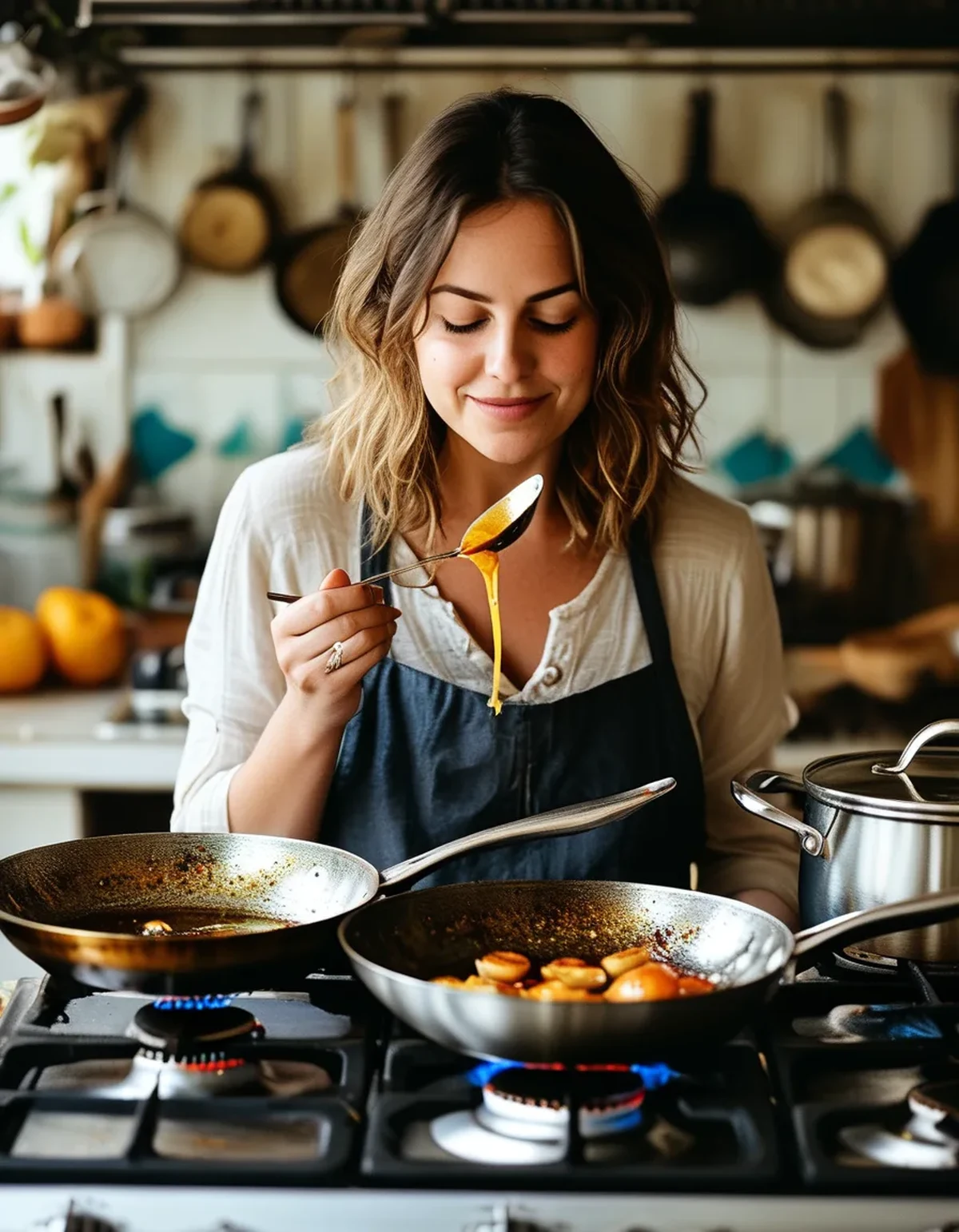
Option one: brown the protein separately. Sear it hard in a small pan, remove it, and return it at the end. This gives you a browned crust and correctly cooked protein, neither of which survives being simmered with everything else.
Option two: crisp something. Onions, breadcrumbs, halloumi, chickpeas, or bacon in a hot dry-ish pan for a few minutes. Scattered on top, a crisp element transforms a soft dish more than any amount of extra seasoning.
Option three: toast something. Nuts, seeds, or spices in a dry pan for two minutes. It is the cheapest possible upgrade and it adds both texture and aroma.
Option four: make a two-minute cold sauce. Yogurt with lemon and salt, tahini with water and garlic, or oil with vinegar and mustard. A cool, sharp element against a warm soft base is the single biggest perceived quality upgrade available.
Option five: cook one green thing properly. Greens wilted in a hot pan for ninety seconds with garlic taste completely different from greens simmered into the main dish for fifteen minutes.
Choose one, not several. The whole point is that this costs four minutes. Two second-pan elements is a different meal with a different time budget.
5 Mistakes That Keep Easy Dinners Boring
Mistake 1: Adding more seasoning to fix a texture problem. If everything is soft, more salt will not help. The problem is contrast, and contrast comes from technique rather than from the spice cupboard.
Mistake 2: Crowding the pan. Too much food in one pan drops the temperature and produces steam, which is why the roasted vegetables came out pale and soft. Two pans with space beats one pan packed.
Mistake 3: Skipping the acid. Almost every flat-tasting dish is missing acid rather than salt. Lemon, vinegar, or pickle juice at the very end lifts everything, and it takes five seconds.
Mistake 4: Adding fresh herbs at the start. Soft herbs cooked into a dish disappear entirely. Added at the end they are a fresh, distinct element. The same herb, used two different ways, produces two different results.
Mistake 5: Judging effort by pans rather than by minutes. A second small pan adds about four minutes and one wash. People avoid it as though it doubles the work, when the actual cost is roughly the time spent scrolling while the first pan cooks.
The one that changes the most meals is the third. Most home cooking is under-acidified rather than under-salted, and the fix takes less time than reading this sentence.
How do you build the habit?
Keep the second pan small and always in reach. A small frying pan that lives on the hob rather than at the back of a cupboard is the difference between doing this and thinking about doing it.
Pick your default second-pan move. Have one thing you do by reflex - toasted nuts, or a yogurt sauce, or crisped onions. Deciding once removes the decision from every subsequent dinner.
Start it while the first pan is already going. The four minutes fits entirely inside the time the main dish is cooking, so the meal does not take longer in wall-clock terms at all.
Keep three finishing items stocked permanently. Something acidic, something crunchy, something fresh. Lemons, seeds, and a herb or a jar of pickles will cover almost every meal you make.
Use the same technique across different dishes. A crisp topping works on pasta, on a grain bowl, on soup, and on a traybake. One technique multiplies across your whole rotation.
And accept one extra thing to wash. That is the actual cost, stated honestly. For most people it is worth it about four nights a week and not worth it on the fifth.
FAQ: The Two Pan Method, Answered
Why does my one pan dinner taste bland?
Because every component cooks in the same liquid at the same temperature, so everything ends up with the same texture and flavour. Browning also cannot happen in a crowded, wet pan.
What is the easiest second-pan addition?
Toasted nuts or seeds - two minutes in a dry pan, no ingredients to buy specially, and it adds both texture and aroma. A two-minute cold yogurt or tahini sauce is a close second.
Does this make dinner take longer?
About four minutes, and most of that fits inside the time the first pan is already cooking. The real cost is one extra item to wash.
What if my dish still tastes flat?
Add acid before adding more salt. Lemon, vinegar, or pickle juice at the very end fixes more flat-tasting food than any other single adjustment.
TL;DR:
- One pan meals bland out because everything shares a temperature, a moisture level, and a flavour profile.
- One small second pan restores contrast: brown the protein, crisp something, toast something, or make a cold sauce.
- Pick one second-pan move, not several - the whole point is that it costs four minutes.
- Most flat dishes need acid rather than salt, and soft herbs belong at the end rather than the start.
- Keep the small pan on the hob and three finishing items stocked: something acidic, something crunchy, something fresh.
The second pan is not extra cooking. It is the four minutes that makes the first pan worth eating.
Keep Reading
This article is for general informational purposes only and is not medical advice. Always consult a qualified health professional for guidance specific to you.