Why One-Pot Dinners Are the Actual Answer to Weeknight Cooking Burnout (Not Just a Trend)
Quick Answer: One-pot dinners solve weeknight cooking burnout mainly by cutting cleanup time and decision fatigue simultaneously — one pan means one thing to wash and far fewer ‘what goes with what’ decisions, which matters more for actual sustainability than the recipes themselves being simpler.
The appeal of one-pot cooking isn’t really about the food being easier to make — it’s about ending the night with one pot in the sink instead of four, which is the part that actually determines whether you cook again tomorrow.

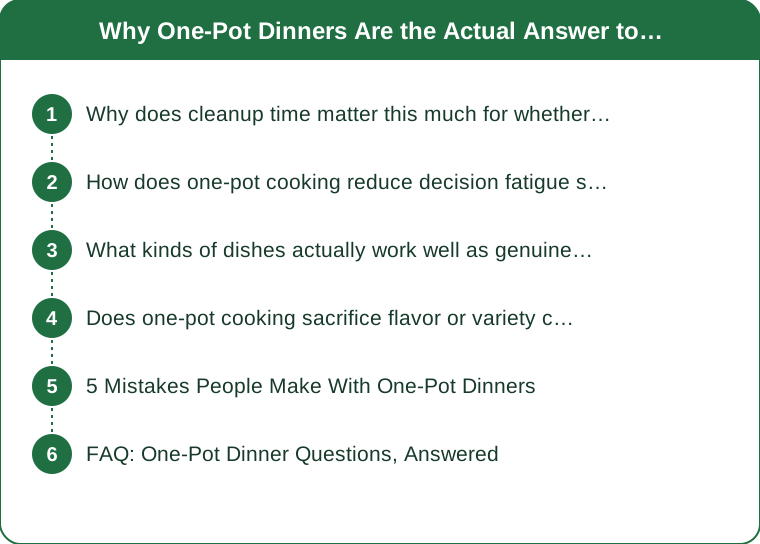
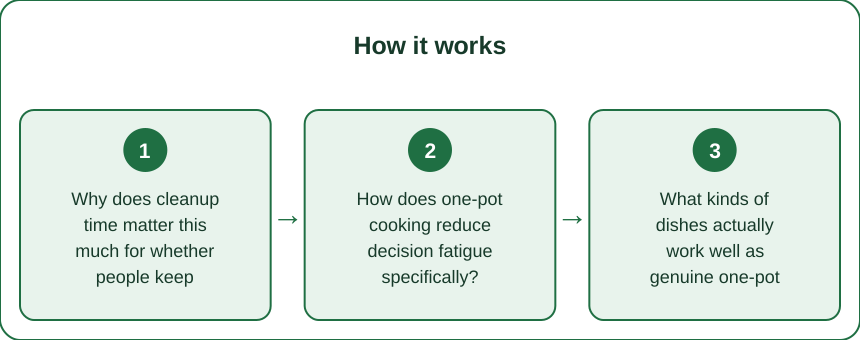
Why does cleanup time matter this much for whether people keep cooking?
Post-dinner exhaustion is real, and facing a sink full of pots, pans, and cutting boards on top of an already tiring day is a bigger deterrent to home cooking than the actual cooking time itself for a lot of people — one-pot meals directly address the part of the process that causes the most resentment, not just the cooking step.
How does one-pot cooking reduce decision fatigue specifically?
A traditional dinner often requires deciding on a protein, a starch, and a vegetable separately, each with its own prep and timing — a one-pot meal collapses that into a single dish and a single decision, removing the accumulated small decisions that add up to real fatigue by dinnertime on a busy day.
What kinds of dishes actually work well as genuine one-pot meals?
Grain-based dishes (risotto-style rice dishes, one-pot pasta), hearty soups and stews, and sheet-pan-adjacent skillet meals that combine protein and vegetables in a single pan all function as true one-pot meals — the common thread is a dish where protein, starch, and vegetable cook together rather than requiring separate pots timed independently.

Does one-pot cooking sacrifice flavor or variety compared to traditional multi-pot meals?
Not inherently — building flavor in stages within the same pot (searing protein first, building a sauce in the same fond, adding grains or vegetables to absorb that flavor) often produces more integrated flavor than components cooked separately and combined at the end, which is part of why one-pot dishes like risotto or paella are considered flavor-forward, not compromised.
5 Mistakes People Make With One-Pot Dinners
- Adding all ingredients at once regardless of cook time, leading to mushy vegetables or undercooked protein.
- Using a pot too small for the volume, causing uneven cooking and overflow.
- Skipping the initial sear or sauté step to save time, losing a meaningful amount of flavor depth.
- Not adjusting liquid ratios for one-pot grain dishes, resulting in mushy or undercooked rice or pasta.
- Treating every one-pot recipe as identical in technique, when soups, risottos, and skillet meals each need slightly different approaches.
FAQ: One-Pot Dinner Questions, Answered
Can one-pot dinners actually be nutritionally balanced?
Yes — building in a protein, a starch or grain, and vegetables within the same pot produces a genuinely balanced meal, it just requires intentional ingredient selection rather than happening automatically.
What size pot is actually most versatile for one-pot cooking?
A large, deep skillet or Dutch oven (around 5-6 quarts) handles the widest range of one-pot recipes, from skillet dinners to soups, without needing multiple pot sizes.
Do one-pot dinners actually save real time, or just dishes?
Both, typically — combined cooking steps and overlapping ingredient prep genuinely reduce total active cooking time in addition to the more obvious cleanup savings.
TL;DR:
- One-pot dinners mainly solve weeknight burnout by cutting cleanup and decision fatigue, not just cooking effort
- Building flavor in stages within the same pot often produces richer results than separately cooked components
- Adjusting for different ingredient cook times prevents the mushy-or-undercooked one-pot mistake
- A large deep skillet or Dutch oven handles the widest range of one-pot recipes
Pick one all-in-one-pot recipe this week and pay attention to how different the end-of-night cleanup feels — that’s the part actually worth optimizing for.
Keep Reading
This article is for general informational purposes only and is not medical advice. Always consult a qualified health professional for guidance specific to you.