Easy Dinner Recipes That Actually Work for Cooking Just One Portion
Quick Answer: Sheet-pan or single-skillet meals built around a protein, one vegetable, and a starch scale down to one portion far more cleanly than recipes designed around large-batch sauces or baked dishes, and shopping for versatile base ingredients (eggs, canned beans, frozen vegetables) avoids the common single-cook problem of buying a whole package for one use.
Most ‘easy dinner’ recipe content is quietly built around feeding four, which is exactly why cooking for one so often feels harder than it should.

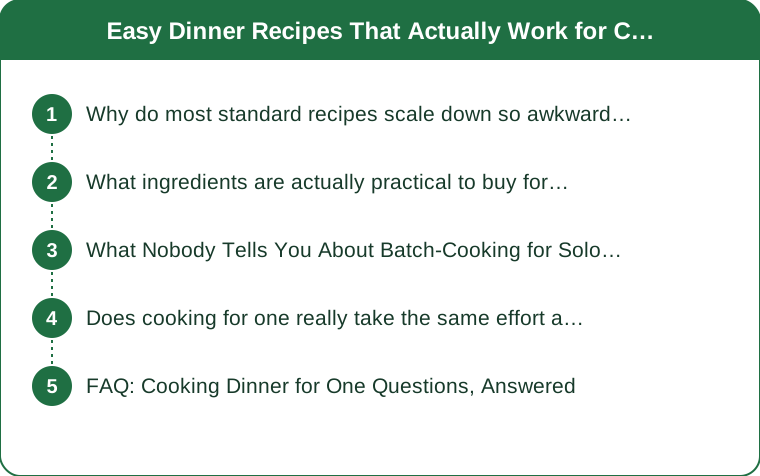
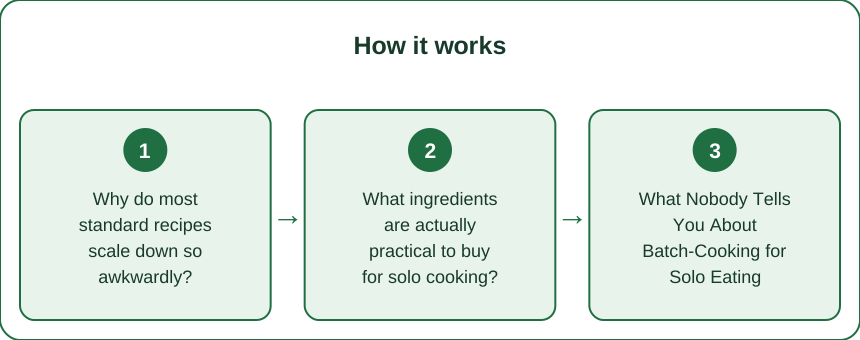
Why do most standard recipes scale down so awkwardly?
Recipes built around baked dishes, casseroles, or complex sauces are often calibrated for a specific pan size or ratio that doesn’t divide cleanly into a single portion — a one-skillet or sheet-pan approach, by contrast, is naturally modular, since you’re just adjusting quantities of separate components rather than dividing a unified dish.
What ingredients are actually practical to buy for solo cooking?
Ingredients that store well and get used across multiple different meals — eggs, canned beans, frozen vegetables, and pre-portioned protein — avoid the common waste problem of buying a full package of fresh herbs or a large cut of meat for a single dinner that then goes unused.

What Nobody Tells You About Batch-Cooking for Solo Eating
Cooking a slightly larger batch of a base component (like grilled chicken or roasted vegetables) once and reusing it across 2-3 different single-portion dinners during the week is often more efficient than cooking an entirely separate single-portion recipe each night, without requiring eating the exact same meal repeatedly.
Does cooking for one really take the same effort as cooking for more people?
Prep and cook time for a single-skillet meal doesn’t scale down proportionally with less food — chopping and cooking one portion of vegetables often takes nearly as long as chopping two, which is why batch-prepping components ahead genuinely saves time across the week rather than cooking fully from scratch each night.
FAQ: Cooking Dinner for One Questions, Answered
Is it worth buying smaller-format ingredients even if they cost more per unit?
For items used infrequently, yes — the cost of unused, wasted food from a large package often exceeds the modest per-unit premium of a smaller size.
How do I avoid getting bored eating the same few easy meals?
Rotating 2-3 different sauces or seasoning profiles across the same base batch-cooked components (like plain grilled chicken) creates variety without requiring entirely new recipes each time.
Are frozen vegetables actually a good substitute for fresh in single-portion cooking?
Yes — frozen vegetables are typically flash-frozen near peak freshness, portion easily without waste, and hold their nutritional value well, making them genuinely practical rather than a compromise for solo cooking.
TL;DR:
- Sheet-pan and single-skillet meals scale down to one portion more cleanly than baked dishes
- Versatile, shelf-stable ingredients avoid the common waste of buying a full package for one use
- Batch-cooking a base component once and reusing it across several dinners saves real time
- Frozen vegetables are a genuinely practical, not compromised, solo-cooking staple
Cooking for one gets easier once the recipe structure itself, not just the portion size, is built around solo cooking.
Keep Reading
This article is for general informational purposes only and is not medical advice. Always consult a qualified health professional for guidance specific to you.