The Dinner Rotation for the First Cool Nights of the Year
Quick Answer: Build a five-dinner rotation around one cooking method - a single pot on the stove - and vary the flavor rather than the technique. The first cool nights create appetite for warm food before anyone has adjusted their shopping, which is the specific gap where the plan collapses. Five reliable warm dinners, all under 35 minutes, close it.
The useful reframe: you do not need autumn recipes. You need the same weeknight structure with a warm output.

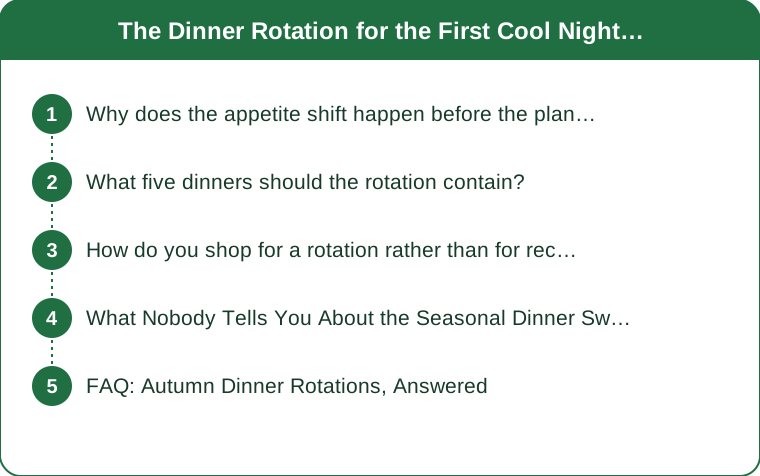
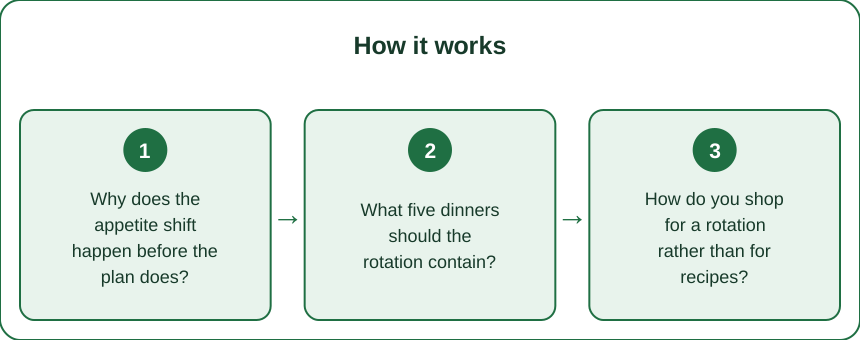
Why does the appetite shift happen before the plan does?
Because appetite responds to temperature immediately and shopping habits respond to it slowly.
What actually changes. In cooler weather the body loses heat faster to the environment, and warm food is both physiologically and psychologically appealing. The preference shift is real and it arrives suddenly - usually the first evening below about 15C.
What does not change on the same schedule:
- What is in your fridge, bought on the same shopping pattern as August
- Your default dinner list, which is whatever you have been making for three months
- Your prep habits, which in summer favored assembly over cooking
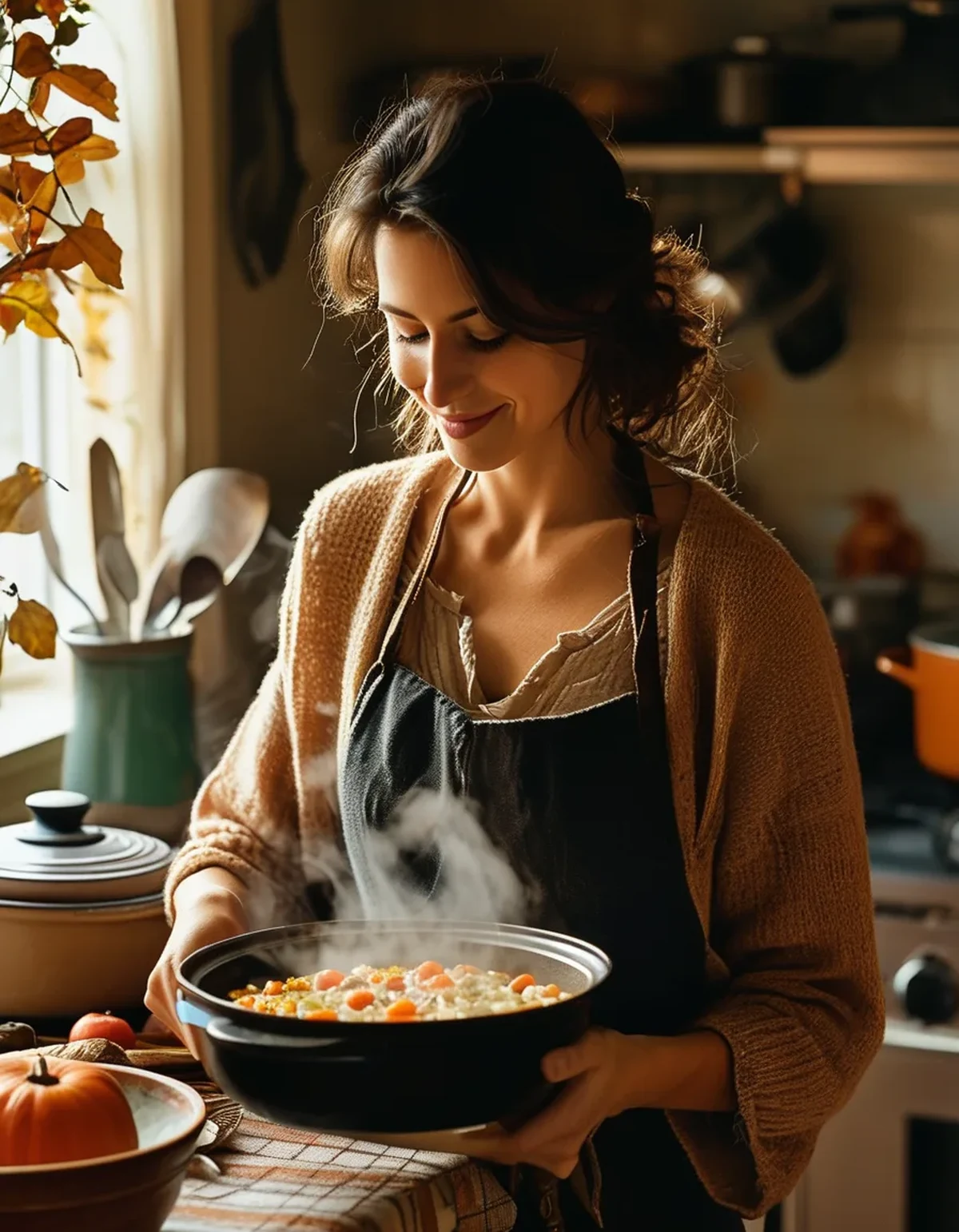
The gap this creates. You want something warm, the ingredients on hand are for something cold, and the mental list of warm meals has not been used since spring. That combination reliably produces takeout, and it produces it for about two weeks until the rotation catches up.
Why it is worth planning for. This is a predictable annual event with a known date range. Five recipes decided in advance closes it entirely, and the cost of not planning is roughly two weeks of expensive and less satisfying dinners.
The other half of the shift: portion and timing. People generally eat slightly earlier and slightly more as evenings cool. A dinner plan built for late summer eating at 8pm may need to move 45 minutes earlier, which matters for anyone whose evening structure is already tight.
What five dinners should the rotation contain?
Five outputs from close to one technique, chosen so the shopping overlaps.
1. A brothy noodle or soup bowl, 20 minutes.
- Stock, aromatics, a protein, noodles, greens wilted at the end
- Endlessly variable by changing the aromatics - ginger and soy in one direction, tomato and herbs in another
- The fastest genuinely warm dinner there is
2. A one-pot grain dish, 30 minutes.
- Rice, orzo, or pearl barley cooked directly in stock with vegetables and a protein
- The grain absorbs the flavor rather than being boiled separately, which is the whole appeal
- One pot, which matters on a weeknight more than anything else
3. A sheet pan roast, 35 minutes mostly unattended.
- Protein and hard vegetables on one tray at 200C, tossed in oil and something acidic
- Almost entirely hands-off, which makes it the right choice for a busy evening
- Works with whatever is in the vegetable drawer, which is its practical strength
4. A thick soup or stew from the freezer, 10 minutes.
- Made in a double batch on a weekend and frozen in portions
- This is the slot that saves the worst weeknight of the week
- Chili, lentil soup, and any bean stew all freeze and reheat well
5. Breakfast for dinner, 15 minutes.
- Eggs in some warm form, with toast and something green
- The lowest-effort warm dinner available and the one people forget exists
Why these five work as a set:
- The shopping overlaps heavily - stock, aromatics, a couple of proteins, hard vegetables, a grain
- The techniques are close enough that you get faster at all of them together
- They cover the full range of available effort, from 10 minutes to 35
The rule that makes rotations survive: change the seasoning, not the structure. The same one-pot grain dish with different aromatics reads as a different meal, and that is far cheaper in effort than five distinct recipes.
How do you shop for a rotation rather than for recipes?
Buy categories, not ingredient lists.
The weekly shopping structure:
- Two proteins for the week, at least one of which freezes
- One or two grains, dry and shelf-stable
- Hard vegetables - onions, carrots, squash, potatoes - which keep for two weeks and are the backbone of every warm dish here
- Soft vegetables for the first three days - greens, mushrooms, peppers
- Aromatics and acid - garlic, ginger, lemons, vinegar. This is the category that creates the variety and it is the one most under-bought
- Stock, in whatever form you use it
Why category shopping beats recipe shopping. Recipe lists produce partial ingredients that go unused, and a single missing item derails the plan. Category shopping means every dinner can be assembled from what is there, and the decision at 6pm is which of five things to make rather than whether you have what a recipe demands.
The three items that do the most for autumn cooking:
- Good stock, which is the difference between a bland one-pot dish and a good one
- A jar of something acidic or fermented - preserved lemon, miso, harissa, mustard. Warm dishes flatten without acid, and this is the single most common reason a home stew tastes dull
- Hard herbs - thyme, rosemary, bay - which keep far longer than soft herbs and suit autumn cooking
On batch cooking, briefly. Making a double portion of the stew and freezing half takes almost no extra time and creates the slot-four dinner for a future week. Doing this once a fortnight keeps the freezer stocked without a dedicated prep session, which is the version most people can actually sustain.
What Nobody Tells You About the Seasonal Dinner Switch
The switch happens about two weeks before people adjust. This is entirely predictable and almost nobody plans for it. Deciding five dinners in late August is a ten-minute task that saves two weeks of drift.
Acid is what makes warm food taste finished. A stew that tastes flat is almost always missing acid, not salt. A squeeze of lemon or a splash of vinegar at the end changes it more than another twenty minutes of cooking - and this single habit improves nearly everything in this rotation.
The oven becomes an asset rather than an enemy. In summer, turning on the oven is a cost; in autumn it warms the kitchen. Sheet pan dinners get better in every sense, and it is worth moving them up the rotation.
Warm dinners tolerate less freshness in ingredients. Slightly tired vegetables that would be unappealing in a salad are entirely fine roasted or in a soup. This reduces waste noticeably as the season turns.
Eating earlier matters more than the food. Cooler evenings tend to shift dinner earlier, and an earlier dinner improves both sleep and evening structure for most people. It is the easiest change on this list and the least discussed.
The freezer portion is the one that actually saves you. Every rotation needs a slot that requires no cooking at all. Without it, one bad evening breaks the whole plan, which is exactly what happens to most dinner rotations in week three.
FAQ: Autumn Dinner Rotations, Answered
Why do I suddenly not want salad anymore?
Cooler weather increases heat loss and shifts appetite toward warm food quickly. The preference changes faster than shopping habits do, which creates the two-week gap where planning fails.
How many dinners does a rotation need?
Five is enough for a working week. More than that adds decision load without adding satisfaction, and rotations with too many options collapse faster than short ones.
How do I stop the rotation getting boring?
Change the seasoning, not the structure. The same one-pot grain dish with different aromatics reads as a different meal for a fraction of the effort.
What is the most useful thing to buy for autumn cooking?
Good stock and a jar of something acidic or fermented. Warm dishes taste flat without acid far more often than they taste under-salted.
Should I meal prep or cook each night?
Both - keep four quick dinners plus one freezer portion. The no-cook slot is what prevents a single bad evening from ending the whole plan.
How far ahead should I plan for the seasonal switch?
Decide the five dinners in late August. The appetite shift arrives on the first evening below about 15C, which is earlier than most people expect.
TL;DR:
- Appetite shifts to warm food two weeks before shopping habits catch up, and that gap is where takeout wins
- Five dinners: brothy bowl, one-pot grain, sheet pan, freezer stew, breakfast-for-dinner
- Shop by category - two proteins, a grain, hard vegetables, aromatics, acid - not by recipe list
- Vary the seasoning rather than the structure; the same technique with different aromatics reads as a different meal
- Add acid at the end. Flat-tasting stew is almost always missing acid, not salt
One freezer portion in the rotation is what keeps a bad evening from ending the whole plan.
Keep Reading
This article is for general informational purposes only and is not medical advice. Always consult a qualified health professional for guidance specific to you.