Five Dinner Formulas for Nights It Is Too Hot to Cook
Quick Answer: The problem is not that you cannot cook in heat — it is that turning on the oven makes the whole evening worse. Five formulas solve it: the cold grain bowl, the big composed salad with a real protein, the cold noodle bowl, the assembly board, and the five-minute stovetop where the only heat is a single pan for under five minutes. Each is a formula, not a recipe, so it works with what you have.
It is 6pm, it is 88 degrees inside, and the thought of turning on the oven is genuinely unpleasant.
The fallback is usually cereal or takeout. These five formulas are barely more effort than either.
Why does hot-weather dinner planning fail so reliably?
Because most of the dinner repertoire people build over a lifetime assumes an oven or a long stovetop session.
Roasting, braising, baking, simmering — the techniques that make food taste good with minimal attention all involve sustained heat, and sustained heat in an apartment in August raises the temperature of the room you then have to sit in for the rest of the evening. A 400°F oven running for 40 minutes measurably heats a small kitchen, and air conditioning then works against it.
So people default to one of two failure modes: takeout, which is expensive and gets old, or snacking as dinner, which leaves you eating again at 9pm.
There is a third problem specific to heat: appetite is genuinely lower, so the mental payoff for cooking is smaller. Effort that produces a meal you only half want is effort that does not get made twice.
What actually works is a shift from recipes to formulas. A recipe requires you to have specific things. A formula tells you the shape of the meal — base, protein, vegetable, fat, acid, crunch — and lets you fill it with whatever is in the fridge. In a season where you are shopping less and the fridge is less predictable, formulas survive where recipes do not.
All five below take under 15 minutes and produce something you would actually choose to eat.
Formula 1 and 2: The cold grain bowl and the composed salad
The cold grain bowl
Formula: cooked grain + protein + two vegetables + fat + acid + something crunchy.
Cook the grain in advance, or use a pouch. Rice, quinoa, farro, couscous, or orzo all work — couscous is the fastest, needing only boiling water and five minutes covered, with almost no heat added to the kitchen.
Protein: canned beans, chickpeas, tinned fish, rotisserie chicken, leftover anything, feta, or a hard-boiled egg.
Fat and acid together are what make this taste like a meal rather than a pile: olive oil plus lemon juice or vinegar, plus salt, is the whole dressing. Do not skip the acid — it is what separates a good cold bowl from a bland one.
Crunch matters more than it sounds: toasted nuts, seeds, cucumber, or raw bell pepper.
The composed salad with a real protein
Formula: sturdy greens + a substantial protein + something starchy + a strong dressing.
The reason most salads do not work as dinner is that they lack two things: enough protein and enough starch. A salad with 4 ounces of protein and a cup of potato, bread, or beans is dinner. A salad without them is a side dish, and you will be hungry in ninety minutes.
Sturdy greens hold up: romaine, little gem, cabbage, kale. Delicate greens wilt under dressing within minutes.
The strong dressing is not optional — a big salad needs more assertive flavor than a small one. Mustard, anchovy, garlic, or a large amount of lemon.
Formula 3 and 4: The cold noodle bowl and the assembly board
The cold noodle bowl
Formula: noodles cooked and cooled + a sauce with punch + raw vegetables + protein + herbs.
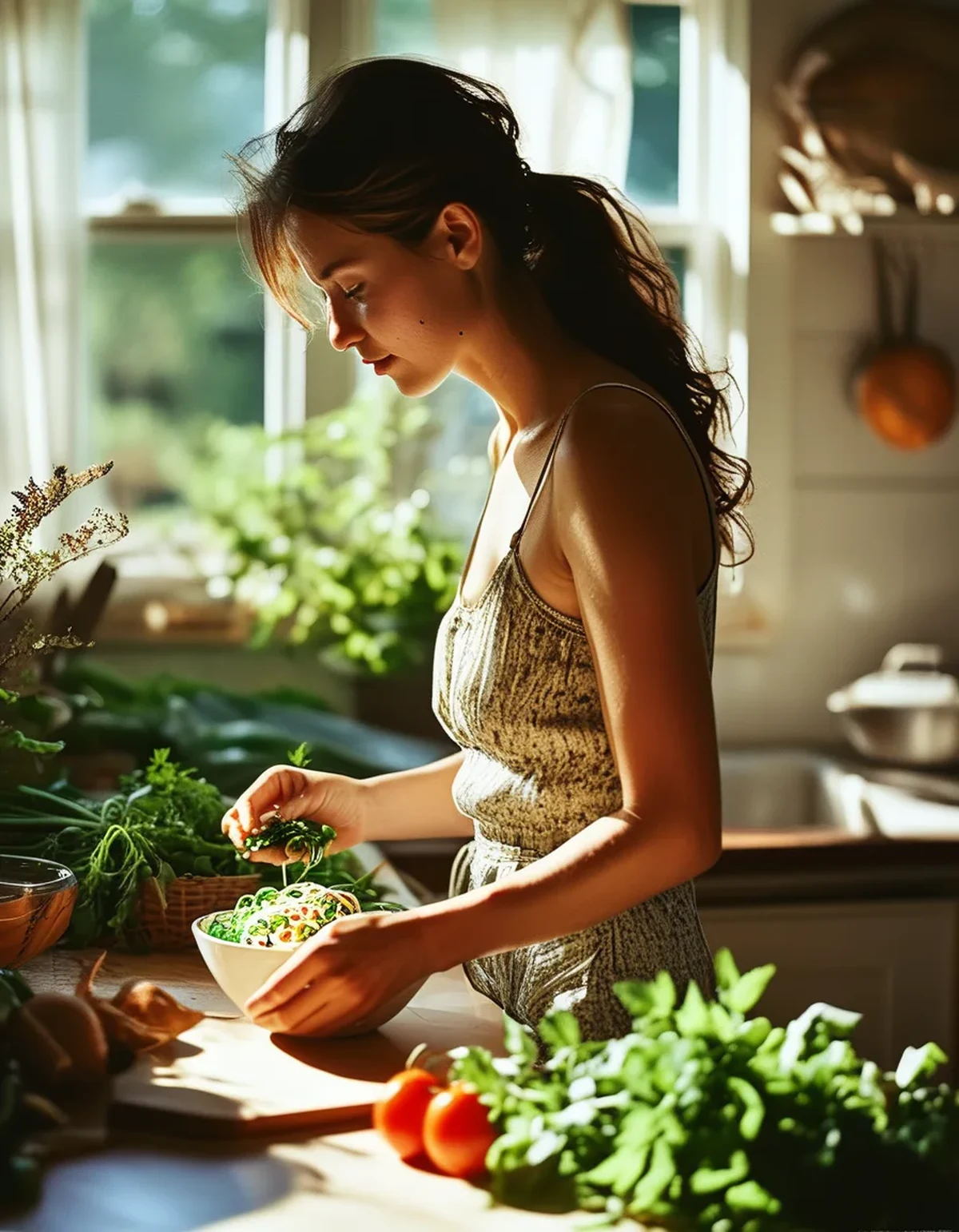
This is the highest reward-to-effort formula on the list. Noodles need about five minutes of boiling — the only heat involved — then get rinsed under cold water, which stops the cooking and cools them immediately. Soba, rice noodles, and thin wheat noodles all work; rice noodles often need only soaking in hot water.
The sauce carries the dish. A peanut-based sauce (peanut butter, soy sauce, lime, a little honey, water to loosen), or a sesame-soy-vinegar dressing, or simply good olive oil with lemon and lots of herbs.
Raw vegetables are the point: cucumber, carrot, cabbage, scallion, bell pepper. Cut thin so they distribute.
Herbs are what make this feel like a restaurant dish rather than cold pasta. Mint, cilantro, basil, or all three.
The assembly board
Formula: three or four proteins or cheeses + something starchy + fresh produce + something pickled.
This is the honest version of “snacks for dinner,” made deliberate enough to be a real meal. The upgrade from snacking is including enough protein and something pickled or acidic, which is what makes it satisfying rather than a series of nibbles.
Hummus, cheese, salami, hard-boiled eggs, canned fish, bread or crackers, cut vegetables, olives, pickles, fruit. Zero cooking, five minutes of arrangement, and it works particularly well when two people want different things.
Formula 5: The five-minute stovetop, and what to prep on cooler days
The five-minute stovetop
Formula: one pan, under five minutes of heat, everything else cold or raw.
Sometimes you want something warm without heating the kitchen. The trick is limiting the heat to a single short burst.
What works in five minutes or less: shrimp (2 to 3 minutes), eggs, halloumi, thin pork or chicken cutlets pounded thin, canned beans warmed with garlic, or a quick garlic-and-oil sauce for pasta. Everything else on the plate stays cold — raw tomato, cucumber, herbs, a cold grain, a salad.
A hot element on a cold base is one of the most satisfying summer plate structures there is, and it costs you five minutes of stove time rather than forty of oven.
What to prep on cooler days
The formulas work far better with a small amount of groundwork, and the right time to do it is a cool morning or a rainy evening.
- Cook a large batch of grain. It keeps 4 to 5 days refrigerated and turns three of these formulas into five-minute meals.
- Hard-boil a half dozen eggs.
- Make one jar of dressing. Any vinaigrette keeps for a week and removes the most-skipped step.
- Wash and cut sturdy vegetables, but not delicate ones.
- Roast or grill a protein once, early in the week, when you are willing to use heat once.
Food safety note for summer prep: cool cooked grains and proteins quickly and refrigerate within two hours — cooked rice in particular should not be left at room temperature, since it can support bacterial growth that reheating does not fully address. In a hot kitchen, spread it out to cool fast rather than leaving a warm pot on the counter.
What Nobody Tells You About Cooking in Heat
Acid does more than salt when it is hot. Vinegar, lemon, lime, and pickled things all read as refreshing in a way that richness does not. If a summer dish tastes flat, it usually needs acid rather than more salt or fat.
Cold food needs more seasoning than hot food. Chilling mutes flavor, so a dressing that tastes right at room temperature will taste bland straight from the fridge. Season cold dishes more assertively than feels correct, or let them sit out for ten minutes before eating.
Herbs are the cheapest upgrade available. A handful of fresh mint, basil, or cilantro transforms a plain cold bowl. In late summer they are at their cheapest and best, and they are the difference between the same formula being boring and being good.
A rice cooker, electric kettle, or microwave adds far less heat to a kitchen than a stovetop or oven. If you must cook, cook in the appliance that vents least into the room.
Eating earlier changes the whole evening. The kitchen is coolest before the peak afternoon heat has fully entered the room, and eating at 6 rather than 8 means you are not cooking at the hottest indoor hour.
Your appetite is genuinely lower and that is fine. Trying to eat a full winter-sized dinner in a heat wave produces exactly the heavy, uncomfortable feeling that makes people give up on cooking. Smaller and more frequent works better in heat, and a snack at 9pm is not a failure.
Leftovers taste better cold in summer than reheated. Almost everything on this list is designed to be eaten cold, which means tomorrow’s lunch requires no equipment at all.
FAQ: Hot Weather Dinner, Answered
How do I make a salad actually filling?
Add a real protein portion and something starchy — beans, potato, grain, or bread. Most unsatisfying dinner salads are missing both, and no amount of extra greens fixes it.
What if I do not want to turn on the stove at all?
Formulas 2 and 4 need no heat whatsoever, and formula 1 works with a ready-to-eat grain pouch. That is three complete dinners with zero cooking.
Do I need to cook the grain fresh?
No — cooked grains keep 4 to 5 days refrigerated and are better cold in these dishes anyway. Cool them quickly and refrigerate within two hours, particularly rice.
How do I stop eating the same thing every night?
Change one element rather than the whole meal. Same grain bowl with a different dressing, a different protein, or different herbs reads as a different dinner for almost no additional effort.
TL;DR: Five formulas, all under 15 minutes, none of which heat the kitchen.
- Cold grain bowl: grain + protein + two vegetables + fat + acid + crunch.
- Composed salad: sturdy greens + a real protein portion + something starchy + a strong dressing. The protein and starch are what make it dinner.
- Cold noodle bowl: five minutes of boiling, then a punchy sauce, raw vegetables, and lots of herbs.
- Assembly board: no cooking at all — add a pickled element and enough protein and it stops being snacking.
- Five-minute stovetop: one hot element on an otherwise cold plate.
- Prep on a cool morning: a batch of grain, a jar of dressing, and hard-boiled eggs turn all of these into five-minute meals.
- Season cold food more assertively and lean on acid rather than richness.
Make the jar of dressing first. It is the step everyone skips and the one that makes the rest work.
Keep Reading
This article is for general informational purposes only and is not medical advice. Always consult a qualified health professional for guidance specific to you.