The Real Reason One-Pan Dinners Feel Faster Even When They're Not
One-pan dinners get credited with being genuinely faster to cook, but the actual time savings usually shows up somewhere else entirely — after the meal, not during it. Here’s where the real time advantage comes from, and how to actually design a dinner around it instead of the wrong part of the process.

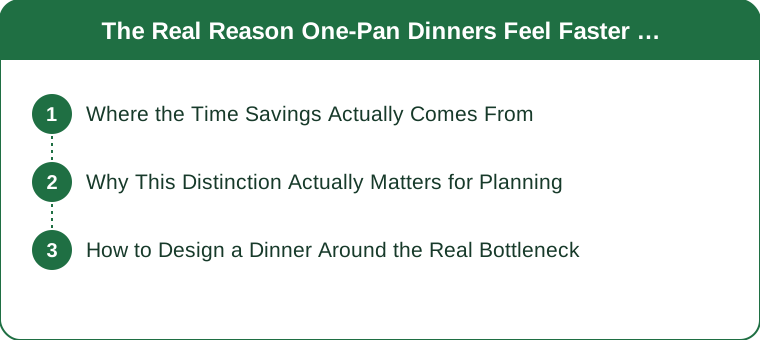
Where the Time Savings Actually Comes From
The real source: the the-a-one-pan-meals-time-advantage-is-concentrated-almost-entirely-in-post-meal-cleanup-not-active-cooking-time (the the active cooking time for a one-pan dinner often matching or barely beating a multi-pan version, while the real time difference shows up afterward in having a single pan and a few utensils to wash instead of a full sink of pots — the the-actual-time-saved-lives-in-cleanup-not-in-the-cooking-process-itself), and the reframe (a dinner marketed as faster to cook actually being faster to finish, which is a different claim entirely).

Why This Distinction Actually Matters for Planning
The practical consequence: the the-choosing-a-recipe-for-active-cooking-speed-alone-can-miss-the-real-time-benefit-entirely (the picking a one-pan recipe purely because it looks quick to cook potentially missing dishes that take slightly longer at the stove but save far more time at the sink afterward, meaning the actual time-optimal choice depends on which phase of the process actually eats the most time on a given night — the the-optimal-choice-depends-on-which-phase-cooking-or-cleanup-is-the-real-bottleneck-that-night), and the frame (evenings tight on cooking time versus evenings tight on end-of-night energy calling for different recipe priorities).
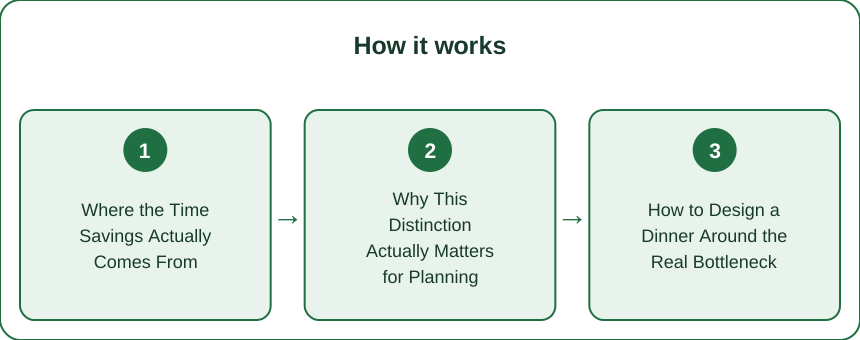
How to Design a Dinner Around the Real Bottleneck
The practical method: the the-matching-recipe-choice-to-whether-tonights-constraint-is-active-time-or-end-of-night-energy-optimizes-for-the-right-thing (the on nights short on active cooking time, prioritizing genuinely fast-to-cook recipes even if they use two pans, and on nights where post-dinner energy is the real limit, prioritizing single-pan cleanup even if the cooking itself takes a few extra minutes — the matching-the-recipe-to-the-actual-nightly-constraint-gets-more-real-time-back-than-defaulting-to-one-pan-every-time), and the frame (this small planning shift getting more real time and energy back than reflexively reaching for one-pan every night regardless of what’s actually limited)).
The time advantage of a one-pan dinner is concentrated almost entirely in cleanup, not in the actual cooking — active cooking time for a one-pan meal often matches a multi-pan version, while the real savings shows up afterward with a single pan and a few utensils instead of a full sink. That means the recipe that’s actually optimal depends on what’s genuinely limited on a given night: a faster two-pan recipe on a night short on cooking time, or a slower one-pan option on a night where post-dinner energy for cleanup is the real constraint.
Keep Reading
This article is for general informational purposes only and is not medical advice. Always consult a qualified health professional for guidance specific to you.