Planned Leftovers: The Cook-Once-Eat-Twice Dinner System
Quick Answer: Planned leftovers means deliberately doubling the slow parts of tonight’s dinner - the roast, the grains, the sauce - and transforming them into a different meal tomorrow in under fifteen minutes: roast chicken becomes tacos, chili becomes loaded baked potatoes, a tray of roasted vegetables becomes grain bowls. Three cook nights a week covers six dinners. It beats classic meal prep because nothing gets eaten five times from a sad box, and it beats nightly cooking because you only face the knife-and-stove work three times a week.
The two dominant dinner systems both quietly fail. Full meal prep - one heroic Sunday, ten identical containers - collapses on the human refusal to eat the same chicken five times, usually by Wednesday. Nightly from-scratch cooking collapses on any week containing actual events. Planned leftovers is the working compromise most good home cooks converge on eventually: never cook from zero two nights in a row, and never eat the same meal twice - even though you only really cooked once.
Why do planned leftovers beat meal prep for most people?
Because the system is built around the two real constraints: weeknight energy and food boredom.
Meal prep solves Monday and loses Thursday. The Sunday batch session works - until repetition fatigue sets in. Eating the same prepped meal on day four is a chore, and chores get replaced by takeout; the containers in the back of the fridge on Friday are the system’s honest verdict. Food boredom is not a discipline failure - palates are built to seek variety, and a system that fights human wiring loses to it eventually.
Nightly cooking solves variety and loses to the calendar. From-scratch every evening delivers wonderful food and requires a schedule with no late meetings, no practices, no low-energy days - a schedule almost nobody has, especially once the school-year season starts. The 6pm decision what is for dinner, made hungry, is where takeout apps earn their revenue.
Planned leftovers splits the difference structurally. You cook a real dinner three nights - the enjoyable kind of cooking, at whatever ambition level suits the night - and you deliberately overproduce the expensive parts: double the protein, double the grains, extra tray of vegetables. The next night, those components get fifteen minutes of transformation into a genuinely different meal: new format, new sauce, new temperature, new cuisine if you like. Effort happens three times; dinner happens six.
And the freshness math works in your favor. Meal prep asks food to be appealing on day five; planned leftovers only ever asks for day two - the day most braises, roasts, and sauces are genuinely at their best. Nothing lives in the fridge long enough to become an archaeology question, which also means the food-safety margins stay comfortable without thinking about them much.
The skill of the system is knowing the transformation pairs - which tonight-dinners convert into which tomorrow-dinners. That is the next section, and it is most of what there is to learn.
The transformation pairs that actually work
Five anchor pairs cover most weeks. The pattern in all of them: the slow part was done last night; tonight is assembly.
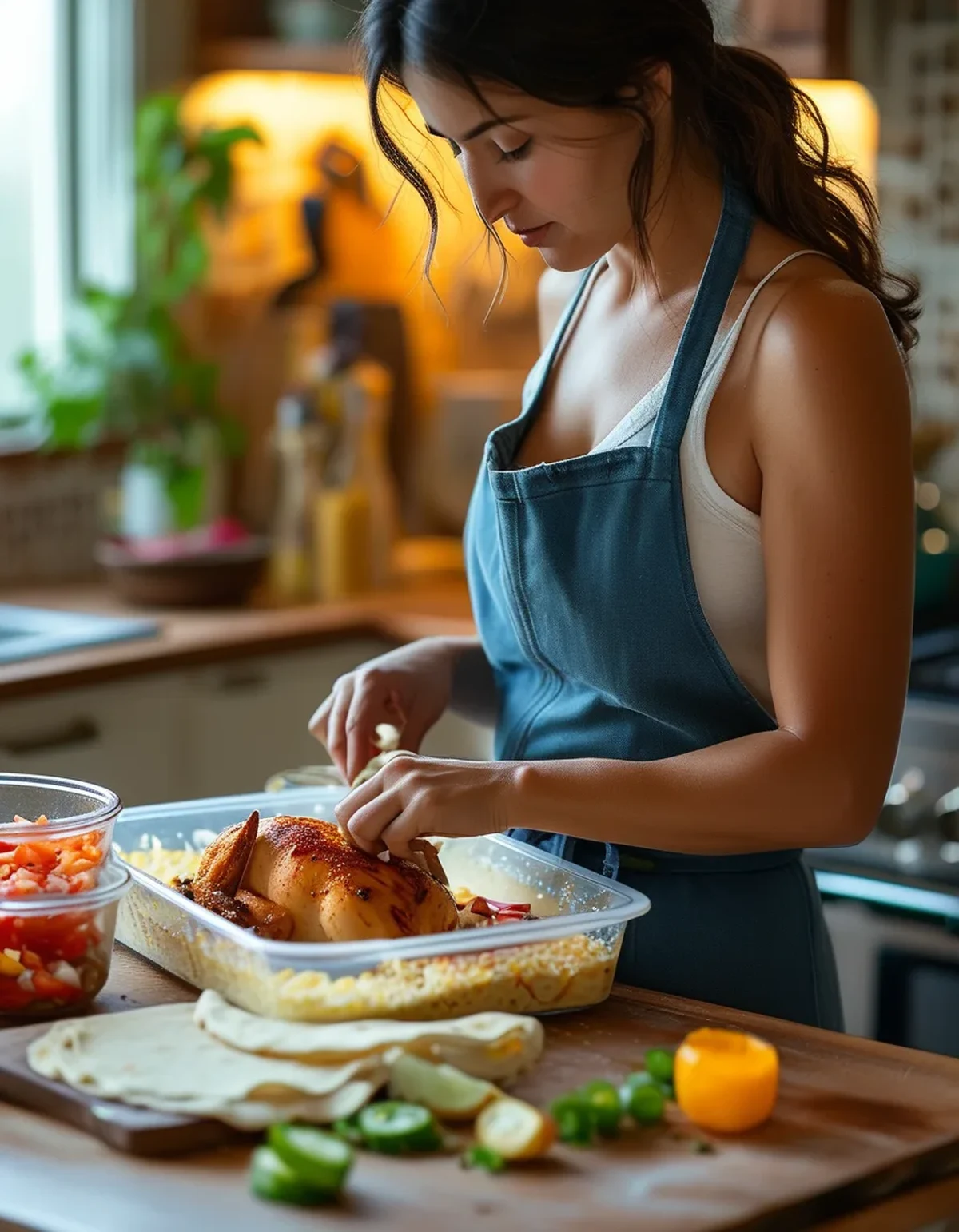
1. Roast chicken becomes tacos, soup, or a big salad. Night one: a whole roast chicken or tray of thighs with potatoes and vegetables - the Sunday classic. Night two, fifteen minutes: shredded chicken reheated with cumin, chili powder, and a squeeze of lime into tacos with slaw and avocado; or into a quick soup with broth, beans, and whatever vegetables remain; or cold over greens with a sharp dressing. One bird, two dinners, zero repeated bites.
2. Chili or any braise becomes loaded baked potatoes or rice bowls. Night one: a pot of chili, ragu, or braised anything - doubled, because pots do not care. Night two: microwave-baked potatoes split and loaded with the chili, cheese, and scallions - a completely different meal experience from bowl-and-spoon night; or the braise over fresh rice with quick-pickled onions. Braises are the best agers in the entire system - day two is famously their peak.
3. A double tray of roasted vegetables becomes grain bowls or frittata. Night one: whatever dinner, plus one extra sheet pan of roasted vegetables riding along in the oven - zero marginal effort. Night two: grain bowls over fresh-cooked couscous or rice with a fried egg and tahini or yogurt sauce; or folded into a frittata with cheese - a ten-minute dinner that reads like brunch.
4. Grilled or seared extra protein becomes tomorrow’s salad or fried rice. Night one: grill or sear double the steak, salmon, or tofu. Night two: sliced cold over a composed salad with a mustardy dressing, or diced into fried rice with day-old grains - which conveniently is what the doubled rice from night one has become. (Extra cooked seafood specifically gets eaten by tomorrow, cold or gently warmed - it is the one protein with a short second act.)
5. Pasta sauce becomes shakshuka-style eggs or a baked gnocchi. Night one: a big tomato-based sauce over pasta. Night two: the sauce simmered in a skillet with eggs cracked in and covered until just set, bread on the side; or tossed with shelf gnocchi and cheese under the broiler.
The universal rule: transform the format, not just the reheat. New shape, new sauce, or new temperature - any one of the three is enough to make night two feel like its own dinner, and that feeling is what keeps the system alive.
How do you plan the week around it?
One template, three rules, and the storage habits that make it safe and good.
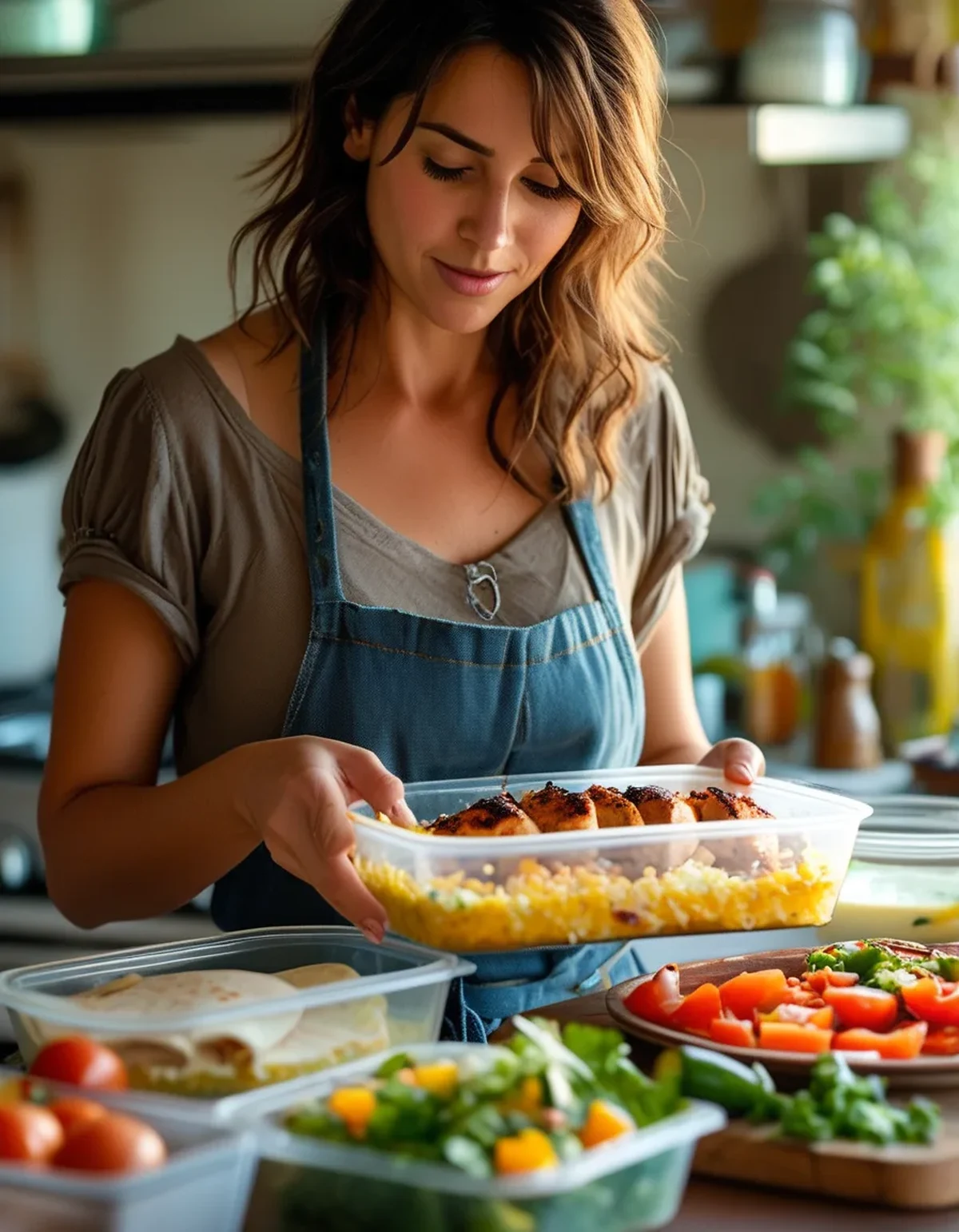
The three-cook template: cook Sunday, Tuesday, Thursday; transform Monday, Wednesday, Friday; Saturday is out, freezer, or breakfast-for-dinner. Anchor the doubling to the cook nights - the roast, the pot, the doubled grains - and let each transform night pull from the night before. Households with chaotic Tuesdays shift the frame; the structure survives any rotation as long as cook nights and transform nights alternate.
Rule one: double what doubles well. The gracious doublers: braises and stews, roasted meats, whole grains and rice, roasted and grilled vegetables, sauces, beans. The poor doublers: anything fried or crisped (breading and crisp textures do not survive the fridge), delicate seafood beyond one day, dressed salads, and pasta already sauced (double the sauce instead, cook fresh pasta in nine minutes). Plan the doubling around the gracious list and the system never serves a sad meal.
Rule two: cool fast, store smart. Get leftovers into shallow containers and into the fridge within about two hours of cooking - shallow matters, because a deep warm pot chills slowly at its center. Label with a day if your household loses track. The general fridge window for cooked leftovers is three to four days, which planned leftovers rarely approaches since everything is eaten by day two - the buffer is the point. Rice gets the strict version of the rule: cooled promptly, refrigerated, and reheated properly once.
Rule three: reheat with intent. Steaming hot throughout is the safety bar; the quality bar is matching the method to the food - braises and sauces back in a pot, roasted things re-crisped in a hot oven or air-styled pan rather than steamed soft in a microwave, and cold-use transformations (salads, tacos from shredded chicken barely warmed) skipping the full reheat entirely.
And keep a transformation pantry standing: tortillas, shelf gnocchi, couscous, eggs, broth, a good jar salsa, quick-pickle vinegar, and a couple of sharp condiments. The fifteen-minute second night depends on these being in the house - they are the tools that turn components into a different dinner instead of the same one reheated.
Myth vs Fact: Leftovers Edition
Myth: Leftovers are sad food. Fact: Reheated leftovers are sad food. Transformed leftovers are just dinner - nobody eating chicken tacos mourns that the chicken roasted yesterday. The sadness was never in the age of the food; it was in the repetition of the experience, and transformation deletes the repetition.
Myth: Day-two flavor is a cope people invented. Fact: For braises, stews, chilis, and tomato sauces, it is documented kitchen reality - flavors continue melding and mellowing overnight as compounds distribute and sharp edges round off. Restaurants make tomorrow’s special today on purpose. The system is not settling for day two; for half the menu it is aiming at it.
Myth: Rice leftovers are dangerous, full stop. Fact: Rice carries a real but fully manageable risk - spores that can produce toxins if cooked rice lingers warm. The handling that closes the issue: cool it promptly, refrigerate within the hour-ish, use within a day or so, reheat steaming. Day-two rice handled this way is standard practice across most of the world’s cuisines; the danger was always the afternoon on the counter, not the calendar.
Myth: Doubling a recipe means doubling the work. Fact: The work in most dinners is setup, knife work, and cleanup - fixed costs that barely notice a doubled quantity. Two trays roast in the same oven; a big pot braises like a small one. Doubling typically adds five minutes and saves the entire following evening, which is the best labor arbitrage in home cooking.
Myth: My family will never eat repeats. Fact: Correct - so do not serve repeats. The system’s whole premise is that Monday’s tacos and Sunday’s roast share ingredients, not identity. Households that announce leftover night get groans; households that just serve loaded baked potatoes get requests for them.
FAQ: Planned Leftover Questions, Answered
How long are cooked leftovers actually safe in the fridge?
The standard guidance is three to four days for most cooked dishes, refrigerated promptly in shallow containers and reheated steaming hot. Planned leftovers structurally stays inside day two, which is why the system feels effortless on safety - the margin is built in. Seafood and rice run the short clock: next day, handled well.
Which proteins make the best second-night material?
Braised and roasted meats lead - chicken, pork shoulder, beef braises - because moisture and flavor improve or hold. Firm tofu and beans transform endlessly. Steak does best sliced and served cold or barely warmed rather than recooked. Delicate fish is the one to plan as a single-night dish or a next-day cold salad only.
Can I freeze instead of eating tomorrow?
Absolutely - the freezer is the system’s release valve. When the week changes, the doubled braise or soup goes straight into freezer containers on night one, becoming a future zero-cook dinner. Freeze in meal-sized portions, label with contents and date, and the gracious doublers (stews, sauces, cooked grains) all freeze beautifully - the crisped and creamy things, less so.
How do I start without overhauling my whole week?
Run one pair this week: roast chicken Sunday, tacos Monday. That is the entire on-ramp. Add a second cook-transform pair the following week, build the transformation pantry as you go, and within a month you are living the three-cook template without ever having adopted a system - which is exactly how the durable ones happen.
TL;DR:
- Cook three nights, transform three nights: double tonight’s slow parts, spend fifteen minutes tomorrow making them a different meal.
- Anchor pairs: roast chicken to tacos, braise to loaded potatoes, roasted veg to grain bowls, extra protein to salads or fried rice, red sauce to skillet eggs.
- Double the gracious agers - braises, roasts, grains, sauces - and never the fried, the dressed, or the delicate.
- Cool fast and shallow, eat by day two, reheat with the method the food deserves.
- Transform the format, not just the temperature - new shape or sauce is what deletes the leftover feeling.
The best dinner system is the one that respects both your Tuesday energy and your refusal to eat the same thing twice. Cook once, eat twice, repeat three times - and the week feeds itself.
Keep Reading
This article is for general informational purposes only and is not medical advice. Always consult a qualified health professional for guidance specific to you.