The One-Pot Dinner Formula for Cold Weeknights
Quick Answer: The formula is aromatic + protein + starch + liquid + vegetable + finisher, cooked in that order in one pot. Change any one component and you have a different dinner; change two and nobody recognizes it as the same meal. Total active time is about 10 minutes, total time 30-35, and the whole thing scales from one person to five without adjusting the method.
Recipes are the wrong tool for a Tuesday. A formula you can run on autopilot with whatever is in the fridge is what actually gets dinner on the table in November.
What is the formula, exactly?
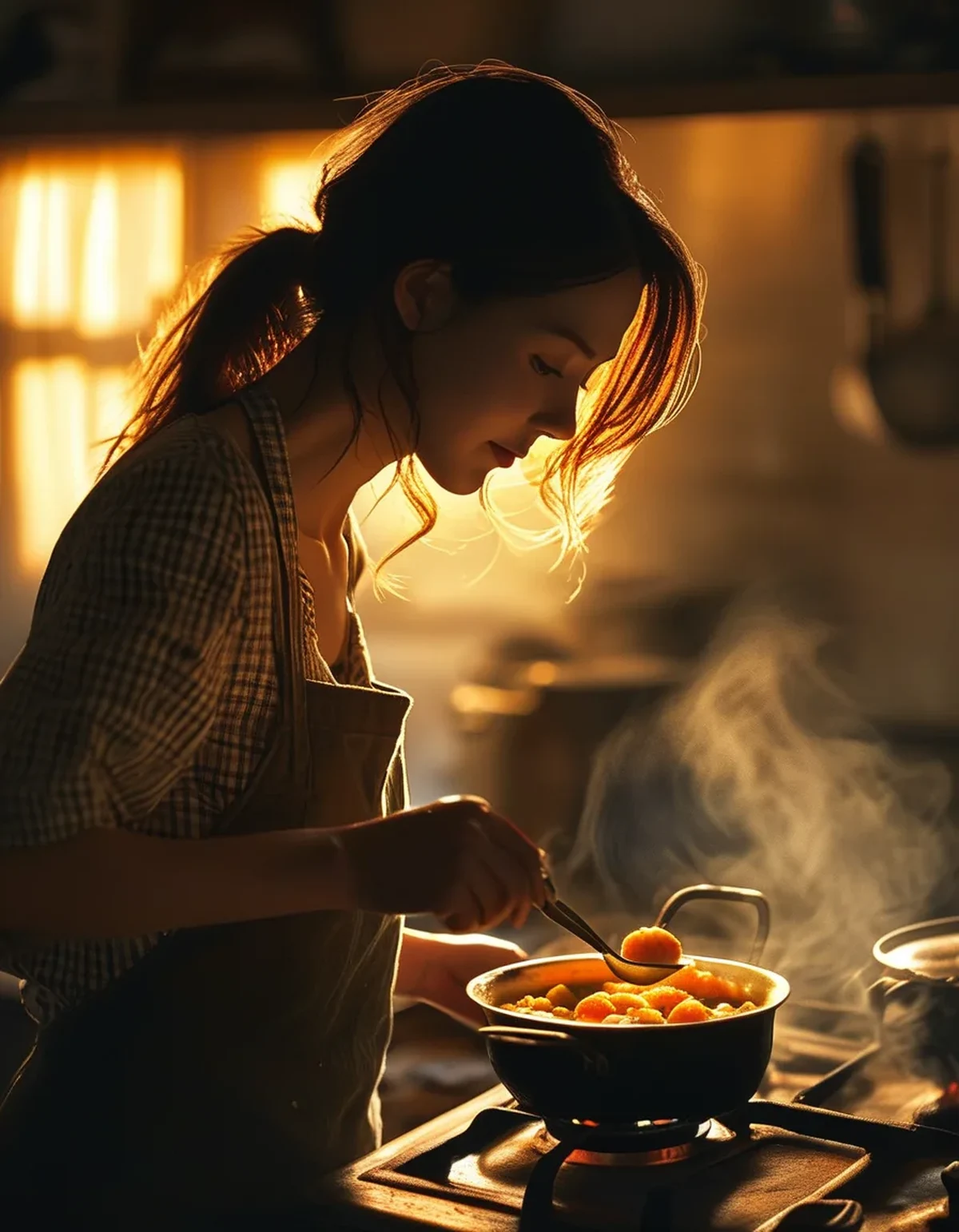
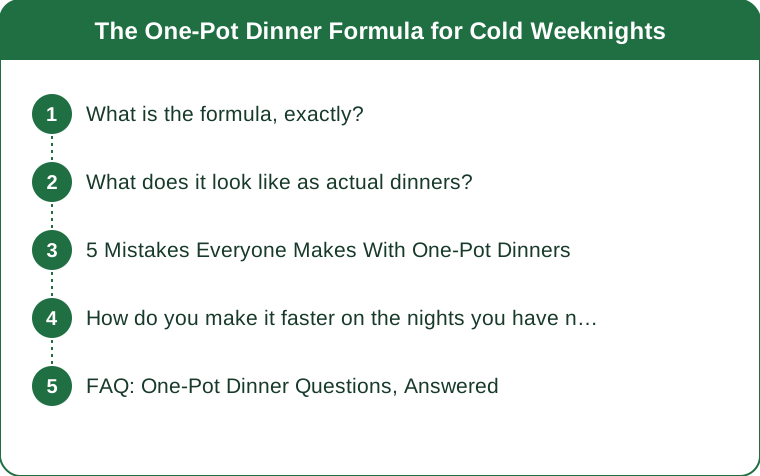
Six slots, cooked in order. Each slot has a handful of interchangeable options.
1. Aromatic (3 minutes). Onion or leek, plus garlic. Optionally ginger, celery, or carrot. Soften in oil or butter over medium heat. Salt goes in here, not at the end.
2. Protein (5 minutes). Ground meat, diced chicken thigh, sausage, chickpeas, lentils, white beans, or cubed firm tofu. Brown it if it browns; otherwise just warm it through.
3. Starch (1 minute to add). Rice, small pasta, orzo, pearl barley, potatoes, or nothing if you are serving over bread. Stir it into the fat so it toasts slightly - this one step improves the finished texture more than any other.
4. Liquid (20-25 minutes to simmer). Stock, canned tomatoes, coconut milk, or water plus a bouillon cube. Roughly twice the volume of the starch, adjusted as it cooks. Bring to a simmer, cover, and leave it.
5. Vegetable (last 5 minutes). Frozen peas, spinach, kale, green beans, or frozen mixed vegetables. Anything delicate goes in at the very end so it does not turn grey.
6. Finisher (30 seconds, off the heat). This is the slot that makes it taste like cooking rather than assembly: acid (lemon, vinegar), fat (butter, olive oil, cream), fresh herb, and something salty-sharp (parmesan, feta, capers, chili crisp).
That is the whole thing. Every warm one-pot dinner you have ever eaten fits this structure.
What does it look like as actual dinners?
Five combinations, same method, completely different meals.
Tomato orzo with sausage: onion and garlic → crumbled Italian sausage → orzo → canned tomatoes plus stock → spinach → parmesan and olive oil.
Coconut chickpea curry: onion, garlic and ginger → chickpeas and curry powder → rice or nothing → coconut milk plus stock → frozen peas and spinach → lime juice and cilantro.
Chicken and rice with lemon: onion and celery → diced chicken thigh → rice → chicken stock → frozen green beans → lemon zest, butter, and parsley.
White bean and kale soup: onion, garlic and carrot → cannellini beans → small pasta → stock → kale → olive oil, chili flakes, and parmesan.
Lentil and tomato stew: onion, garlic and cumin → red lentils → nothing, the lentils are the starch → canned tomatoes plus water → spinach → yogurt and lemon.
The pattern that makes this work: you are not remembering five recipes. You are remembering one order of operations and looking at what is in the cupboard. That is a fundamentally lower cognitive load on a Tuesday at 7 pm, which is the actual reason weeknight cooking fails.
Scaling: the formula scales linearly except the liquid, which needs slightly less than double when you double everything else. Start lower and add - you can always thin it, you cannot easily thicken it.
5 Mistakes Everyone Makes With One-Pot Dinners
1. Adding the starch too late. The starch needs the full simmer time in the liquid to cook properly and to release the starch that gives a one-pot dinner its body. Adding cooked pasta at the end produces a soup with pasta in it, not a one-pot dinner.
2. Under-salting the aromatics. Salt added at the beginning draws moisture out of the onions and seasons through the whole dish. Salt added at the end sits on the surface and tastes sharp. Season in layers, tasting at each stage.
3. Skipping the finisher. This is the difference between a competent dinner and a good one, and it takes thirty seconds. Almost every one-pot dinner that tastes flat is missing acid. A squeeze of lemon transforms nearly anything in this category.
4. Using a pot that is too small. A crowded pot steams rather than browns, and browning at the protein stage is where a lot of the flavor comes from. Use a wide, heavy pot - the extra surface area is doing real work.
5. Cooking the delicate vegetable for the whole simmer. Spinach, peas, and green beans need three to five minutes. Twenty-five minutes turns them olive-grey and mushy, and it is the most common reason home one-pot dinners look worse than restaurant versions.
How do you make it faster on the nights you have nothing?
Keep the formula’s shelf-stable slots permanently stocked. Onions, garlic, canned tomatoes, coconut milk, stock cubes, canned beans, lentils, rice, and small pasta. With those six things, you can run the formula without shopping. The fridge is for the variable slots.
Freeze the aromatics. Frozen diced onion and pre-minced garlic remove the three-minute prep step and the entire chopping decision. Cooks who take this seriously never chop an onion on a weeknight.
Use frozen vegetables for slot five, always. They are cheaper, they need no preparation, they do not go bad, and nutritionally they compare well with fresh. This is where the biggest weeknight time saving lives.
Batch the protein on Sunday. Brown a large quantity of ground meat or roast a tray of chicken thighs, and slot two becomes a thirty-second addition for three nights.
Build a finisher shelf. Keep lemon, good olive oil, parmesan, chili crisp, and one fresh herb where you can reach them. If the finisher requires opening the fridge and hunting, it will not happen.
And the realistic target: you are not aiming for seven nights. Four nights of this formula, one night of leftovers, one takeaway, and one night of eggs on toast is a functioning week. Systems that demand seven nights fail in the second week of November.
FAQ: One-Pot Dinner Questions, Answered
What pot should I actually use?
A wide, heavy-bottomed pot or a deep sauté pan with a lid, around 4-6 quarts. Heavy bottom matters because thin pans scorch the starch on the base during the simmer. Enameled cast iron is ideal; a decent stainless pan is fine.
How do I stop the rice or pasta sticking to the bottom?
Stir once at about the ten-minute mark, keep the heat at a genuine low simmer rather than a boil, and use a heavy pan. If it still catches, add a little more liquid and lower the heat.
Does this work for meal prep?
Very well for the bean and lentil versions, less well for the pasta versions, which continue absorbing liquid and go soft overnight. If prepping ahead with pasta, undercook it by two minutes and add a splash of stock when reheating.
How do I make it feel less repetitive?
Change the finisher before you change anything else. The same base with lemon and parsley versus lime and cilantro versus vinegar and chili tastes like three different dinners, and it costs nothing.
TL;DR:
- The formula is aromatic → protein → starch → liquid → vegetable → finisher, in that order, in one pot.
- Toast the starch in the fat, simmer covered for 20-25 minutes, add delicate vegetables in the last 5.
- The finisher - acid, fat, herb, something sharp - is what makes it taste cooked rather than assembled.
- Stock the six shelf-stable slots and use frozen aromatics and vegetables, and this runs without shopping.
Learn one order of operations and you have stopped needing weeknight recipes. That is the whole point - not a better dinner, a dinner that reliably happens.
Keep Reading
This article is for general informational purposes only and is not medical advice. Always consult a qualified health professional for guidance specific to you.